
Can Paying Peer Reviewers Fix the Referee Shortage in Medical Research?

By Christopher Cotton, Abid Alam, and David Maslove, Queen’s University

Peer review is central to scientific publishing. Whether in economics, science, or medicine, peer review ensures research is carefully checked before reaching practitioners, policymakers, and the public. Yet, the system, which relies on experts volunteering their time, often struggles to secure enough qualified reviewers. As submissions increase and experts’ time becomes increasingly stretched, journals face delays, rushed or lower-quality reviews, and inconsistencies in evaluation.

Medicine experienced heightened challenges during the COVID-19 pandemic, as high submission volumes and limited expert availability put unprecedented strain on the system. Many researchers turned to pre-prints (papers published online without formal peer review) to speed dissemination, a practice historically less common in medical publishing.

Could paying peer reviewers help alleviate the reviewer shortage? We tested this question experimentally at Critical Care Medicine, a leading medical journal (see also the coverage of our work at Nature). Our study found modest improvements, suggesting that payment alone is insufficient to fully address the peer-review bottleneck.

Read More »
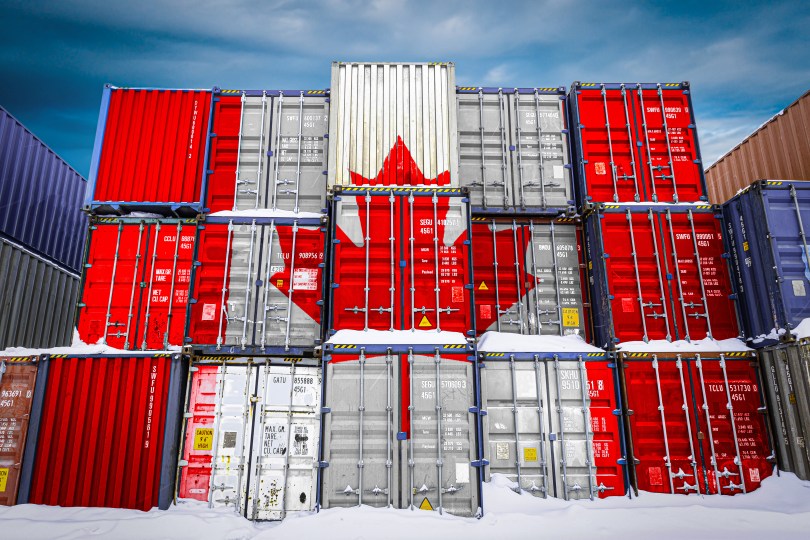

True North Strong (But Free?): Frictions to Inter-Provincial Trade in Canada

This QED Spotlight article by Brock Mutic (JDI Research Associate) presents research by QED Professor Beverly Lapham and PhD Candidate Daniel Teeter.

It is widely agreed upon by economists that intra-national trade frictions—barriers to seamless trade between regions within a country—can impact a country’s economic performance. In the Canadian context, as each province and territory has its own regulatory environment and particular trade rules, provincial borders—in addition to being geographic—are also frictional and affect the flow of goods and services within the country. Understanding the size of inter-provincial trade frictions in reality, and their effect on the flow of trade in Canada, is an important question for understanding their costs to the Canadian economy. Queen’s Economics Department Professor Beverly Lapham recently teamed up with QED Ph.D. candidate Daniel Teeter to study this important issue in a recent QED Working Paper, where the team used a state-of-the-art gravity analysis to examine the size and importance of inter-provincial trade frictions in Canada between 1997 and 2019. Their research ultimately produced insightful and policy-relevant results. 

Read More »

What can the human genome project teach us about intellectual property policy?

By Kyla Fisher, M.A. Economics, Queen’s University

Innovation is one of the primary drivers of economic growth and improvements in living standards. It often produces larger social benefits than private benefits, leading firms to under-invest in R&D compared to the socially-optimal level. One of the ways that the government works to overcome this gap is through offering intellectual property (IP) protections, giving firms a temporary monopoly on commercializing their ideas. In addition, many governments allocate significant funds directly towards research through public research institutions or universities. However, it is difficult to determine the impact of these public efforts to stimulate innovation as we are unable to know the counterfactual. This article reviews the findings from an innovative study by Heidi Williams (2013) on the use of IP during the sequencing of the human genome. The study exploits the discrete nature of gene sequencing and the fact that it was researched both publicly and privately to evaluate the impact of IP on innovation outcomes. Despite the importance of IP policy for technological innovation there are relatively few empirical studies in this area. For this reason, Williams’ study generated quite a bit of interest at the time of publication and has been cited in multiple U.S. Supreme Court briefings.

Read More »